Tim Wilkinson
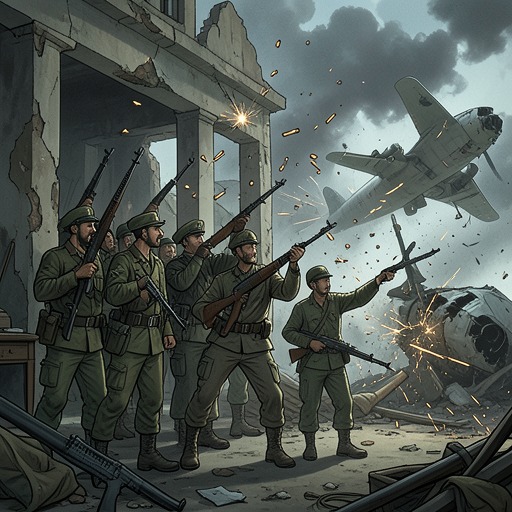
Black Hawk DownTim Wilkinson is a combat medic whose work under fire becomes a decisive effort to keep critically wounded soldiers alive. When a radio call reported that the men sheltering across the street needed another medic, Wilkinson left the wrecked Black Hawk where he had been tending casualties and crossed the exposed road to reach them.
Combat Medicine Under Fire
Wilkinson had descended by rope to the crash site as part of a 15-man combat search-and-rescue team. Now, with night approaching and the force short of water and other supplies, he gathered his medical kit and ran toward the building where Carlos Rodriguez lay badly wounded. Before setting out, he asked the other wounded medic to cover him, delivering the request with the deadpan timing that had made him the team comic.
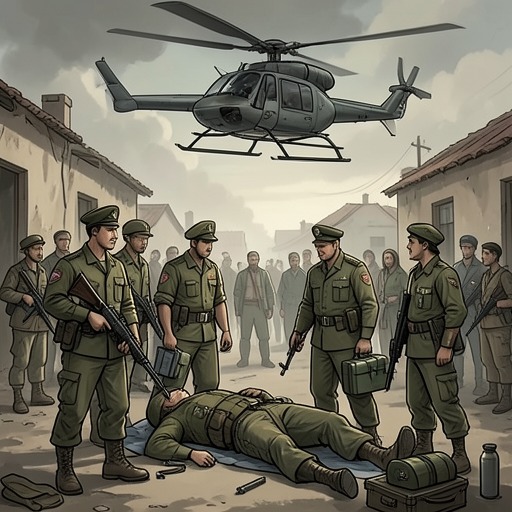
Inside the courtyard, two commando sergeants were struggling to restrain the terrified Rodriguez. Wilkinson cut open his uniform and found a severe wound: a bullet had passed through his buttock and pelvis, blown off one testicle, and exited through his upper thigh. He packed the gaping wound with Curlex, a gauze that expands as it absorbs blood, then fitted pneumatic pants over Rodriguez’s legs and inflated them to apply pressure. The bleeding stopped.
Wilkinson started an IV, but he was nearly out of fluids. The extra bags were back at the crash site, so he crossed the road through the gunfire again to retrieve them, then made another dash back with the fluids cradled in his arms. After moving Rodriguez and the other wounded into a rear room, he told ground commander Scott Miller that Rodriguez was critical and needed to be evacuated immediately; the others could wait. Wilkinson’s work thus joined emergency treatment to triage: he stabilized the most gravely wounded man, replenished the fluids needed to continue care, and pressed for the urgent evacuation his condition demanded.
Care and Guard Duty in the Rear Room
Wilkinson’s treatment continued in a crowded rear room where wounded men had been gathered. John Stebbins arrived covered in dust, with his pants burned away and his leg bleeding; nearby, Carlos Rodriguez was moaning and breathing in short, sucking gasps. Three Somali occupants had moved to the floor while the wounded were brought in, and Wilkinson eased Stebbins onto a couch before cutting away his left boot with shears. The room’s blood, sweat, and urine made the limits of emergency care tangible: there was little space, darkness had fallen, and the men needing help were still inside a besieged building.
Wilkinson told Stebbins that he was out of action and that the numbness in his leg would pass. He could offer only Percocet and iodized water, but he also handed Stebbins a rifle and assigned him to guard a window. The gesture joined treatment to the immediate demands of defense: even while injured and unable to return to his position, Stebbins was given a task he could perform from the room. Wilkinson’s care therefore extended beyond stopping blood loss; it helped keep wounded men oriented and incorporated into the unit’s desperate, improvised system of survival.
A Medic in a Citywide Casualty Crisis
Wilkinson’s work inside the building took place amid a disaster that extended far beyond the American positions. At Volunteer Hospital, wounded people had begun arriving the previous evening, at first only in a trickle because burning roadblocks and helicopters firing low over the city made travel dangerous. By October 4, all 500 beds were expected to be occupied, with at least 200 additional wounded in the hallways; the larger Digfer Hospital faced still greater numbers. Surgeons worked through the night, and delays in reaching treatment meant that infections from gut wounds could become fatal before the scarce antibiotics could help. This wider emergency gives scale to the shortages Wilkinson faced: his search for more IV fluids was one urgent task within a city where medical capacity was being overwhelmed.
The people around the wounded in the courtyard also complicate any simple division between a battlefield and civilian life. Three Somali occupants were present in the rear room as the wounded were brought in, while the fighting outside had drawn armed men and civilians into the same streets. Elsewhere, a frightened resident approaching the gunfire encountered dead people of different ages, a wounded American soldier, and a woman caught in the exchange of shots. These episodes do not make the occupants of Wilkinson’s room participants in his medical decisions, but they show the crowded human setting in which care had to proceed: the wounded, the people sheltering them, and the combatants remained close together as the city’s ordinary spaces became places of injury and refuge.
Improvisation After the Mission’s Assumptions Failed
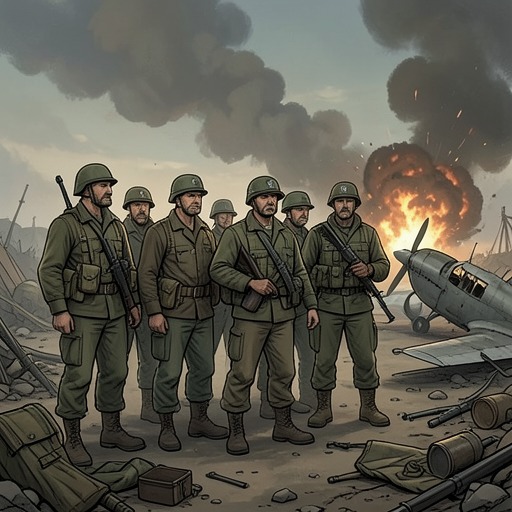
The emergency was intensified by how the force had prepared for the operation: expecting a midday mission of about an hour, many men had left behind their Night optical devices (NODs) and canteens. As darkness arrived, the wounded were thirsty, tired, and low on ammunition, and the men could no longer see well in the night. Wilkinson’s repeated trips across the exposed road for medical supplies unfolded within that larger collapse of the mission’s assumptions. His work was not a cure for the conditions surrounding the wounded; it was a practical, time-critical response to them, preserving care with the equipment and fluids he could reach while the fight continued.